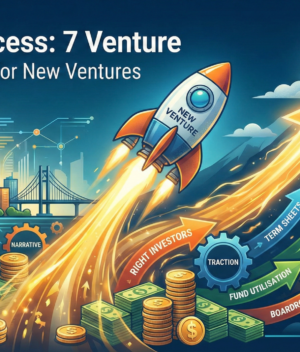


Picture this: a small group of founders working late nights in a shared workspace. They have limited resources but a bold idea. Months later, the same idea attracts millions from eager startup investors who see its potential to change the world. This shift from humble beginnings to big opportunities is no longer rare—it has become the new normal.
Why are startup investors so confident about betting big on the future? The answer lies in how technology, markets, and consumer behaviour are changing faster than ever before. Investors recognise that startups are not only solving today’s problems but also building the future.
Why Startup Investors See Startups As The Future
Startup investors are drawn to bold innovation. Unlike established firms, startups embrace risk, adapt quickly, and challenge outdated systems.
- They spot gaps in markets that big companies often overlook.
- They bring disruptive products that make industries rethink themselves.
- They are often run by passionate teams willing to push beyond limits.
For investors, these qualities create opportunities to earn significant returns while backing new ideas that can scale globally.
Key Reasons Startup Investors Are Betting Big
1. Massive Market Potential
Startup investors look for industries that are set to grow fast. Technology fields like artificial intelligence, renewable energy, and healthtech are exploding. Early bets on these sectors can deliver exponential rewards.
- AI startups are simplifying work and creating personalised customer experiences.
- Clean energy startups are providing sustainable solutions that industries need.
- Healthtech startups are reducing costs while making healthcare more accessible.
2. Disruption Creates First-Mover Advantage
When startups bring disruption, they create entirely new categories. Startup investors know that being the first mover matters. For example, a fintech startup introducing digital wallets or instant loans can capture millions of users before traditional banks adjust.
Investors love this advantage because it means faster growth and stronger brand recognition.
3. Scalable Business Models
Another reason startup investors are betting big is scalability. Startups today design products and services that can serve not just a local market but the whole world.
- Cloud-based tools can onboard global users instantly.
- Apps can scale to millions of downloads with low additional cost.
- Platforms can expand quickly across geographies without heavy investment.
This scalability offers investors the chance to back ventures that grow exponentially, not gradually.
4. Changing Consumer Demands
Modern consumers want speed, transparency, and personalisation. Startups are quick to adapt, unlike large companies with slow processes.
Startup investors notice how startups use customer data to adjust products, improve services, and stay relevant. Investing in such ventures means staying ahead of shifting consumer expectations.
5. Strong Founding Teams
For many startup investors, the team matters even more than the idea. A strong founding team with vision, resilience, and complementary skills can pivot when needed and push through challenges.
Investors bet on founders who:
- Have deep industry knowledge.
- Show passion and commitment.
- Can attract talent and build networks.
6. Global Access To Capital
With more venture funds, angel networks, and even crowdfunding platforms available, startup investors now have better access to opportunities. The rise of global investment networks makes it easier for startups to raise capital and for investors to discover high-potential ventures.
What Startup Investors Look For Before Betting Big
Clear Value Proposition
Investors want startups to answer one question: what makes this different? Clear messaging on the value proposition builds trust.
Traction And Growth Metrics
Early adoption, revenue figures, or even strong user engagement signals market demand. Startup investors look for numbers that prove growth potential.
Intellectual Property Or Technology Edge
If a startup has a patent, proprietary algorithm, or unique process, it becomes more defensible. This increases investor confidence.
Financial Discipline
Investors prefer startups that show wise use of funds. Clear financial planning and realistic projections are strong signals.
Real Examples Of How Investors Bet Big
- A renewable energy startup with an affordable solar solution raised heavy investment because it promised a scalable, sustainable business.
- A healthtech startup offering AI-based diagnosis got backing for its ability to reduce costs in rural healthcare.
- Fintech startups providing instant small loans became investor favourites by solving urgent financial needs in underserved markets.
Each example shows how startup investors are betting not just on ideas, but on solutions that shape the future.
Challenges For Startup Investors
It is not all smooth. Betting on startups carries risks:
- High failure rate in early-stage companies.
- Over-valuations that don’t match actual performance.
- Regulatory hurdles that slow down operations.
Despite this, investors continue to bet big because the rewards from one successful startup can cover losses from many others.
How Startups Can Attract Investors
- Define a simple and compelling vision.
- Showcase traction with numbers or customer stories.
- Protect intellectual property where possible.
- Build a team with skills and resilience.
- Demonstrate how funds will be used for growth, not waste.
When startups focus on these steps, they increase their chances of attracting serious investor interest.
The Bigger Picture
Startup investors are not only funding companies. They are shaping industries, building ecosystems, and influencing economies. Every rupee or dollar invested in a startup today is a seed for tomorrow’s breakthroughs.
The future belongs to startups that can dream boldly, execute smartly, and adapt quickly. And it belongs to investors who believe in these journeys.
As we move into an era where technology reshapes every corner of life, startup investors will continue to bet big. Their confidence fuels the very ideas that redefine how we live, work, and connect.